

First-time safari & road trips
~R360 (adult, intl.)
May to September
By Car, Garden Route
A safari is one of the things you shouldn’t skip on a South Africa trip, and if you’re driving the Garden Route, Addo Elephant Park is the easiest one to add. It’s South Africa’s third-largest national park and one of its most accessible safari destinations, especially if you don’t want to book an expensive guided game drive or rent a 4×4. What makes Addo different is that you can do a self-drive safari, in your own rental car. In this guide about Addo Elephant Park you will find everything you need to know: how to get there, when to go, where to stay, what a day in the park actually looks like, and the tour options if you’d rather not drive. A visit to Addo was part of our 3-week South Africa itinerary. Read the full itinerary here.
Addo is South Africa’s third-largest national park and it’s famous for one thing above all: elephants. More than 600 of them live here, one of the densest elephant populations anywhere in Africa. That alone makes it worth a visit, but what actually makes Addo special is that you don’t need a guide or a 4×4 to see them. You drive yourself, at your own pace, in the rental car you already use for driving the Garden Route.
Addo is also malaria-free, which matters if you’re combining it with the Garden Route and don’t want to deal with anti-malarials for a single day trip. On top of the Big Five (elephant, buffalo, lion, rhino and the much harder to spot leopard), Addo’s marine section near Gqeberha is sometimes counted with the park as the “Big Seven,” adding great white sharks and southern right whales to the list if you’re willing to go out on a boat tour.
Alternatively, you can visit one of the Garden Reserves close to the Garden Route, if you prefer a private park and don’t want to drive all the way to Addo.

May to September is the best window for a self-drive safari at Addo. It’s the dry winter season, temperatures are mild, and the vegetation thins out, so animals gather around the waterholes instead of hiding in thick bush. It’s also quieter than the December and January summer holidays.
Summer in South Africa, from October to March, brings lusher landscapes but also higher temperatures and the occasional rain shower. We visited in January and the weather worked out fine, warm but not extreme, so this really is a year-round destination if May to September doesn’t fit your itinerary. Generally, a good time and popular time to visit South Africa is from December to February, and Addo is also great during that time frame.
The daily conservation fee for the current 2025/2026 season is around R492 (about €26) per international adult. South African citizens and residents pay less, around R110 for an adult. Fees are reviewed every November. There’s also a WILD card available for unlimited access to all South African national parks for a year, priced at around R4,160 (about €200) at the time of our visit. A good option if you’re planning more than one or two park visits in South Africa this trip.
The main gate and reception are open from 7:00 to 19:00, while the wildlife viewing area is typically accessible from 6:00 to 18:00 in summer and 7:00 to 17:30 in winter. Buy your tickets at the reception.
Top tip: the gates open earlier than the reception does, get your ticket the day before if you want to be first in line at opening time. Staying at a camp inside the park solves this as well. This is the best option if you get the earliest, quietest hours without needing to plan around reception hours.


We drove from Jeffreys Bay to Addo, and from Addo onward to Oudtshoorn. If you’re coming from Jeffreys Bay or Gqeberha (formerly Port Elizabeth), it is important to pick the right route. Avoid the R335 from Gqeberha to Addo and don’t drive past Motherwell. Instead, take the route via Gqeberha and Paterson, then loop around to your accommodation or the park entrance. Around Addo, the roads are not as well maintained as on the Garden Route, but still doable.
The road to or from Oudtshoorn, a common loop for a Garden Route trip, is also fine to drive. Use the R-roads over Steytlerville and Willowmore. The main thing to plan for is your gas stops, so you don’t end up filling up somewhere sketchy or running low mid-route.
If you’re staying at a lodge or camp just outside the park, expect dirt roads. Our drive to AfriCamps at Addo was technically on an R-road, and it was so bumpy that we all got out of the car (except the driver of course), just to avoid scraping the bottom.
Addo has two main entrances. The Main Gate, in the north, gets you to the main camp area fastest and is where most day visitors start. The Matyholweni Gate, in the south, is closer if you’re coming from Gqeberha, about a 30-minute drive along the N2.
The southern section around Matyholweni feels quieter and more scenic, with thicker vegetation, which also means wildlife is harder to spot there. The northern section, around the main camp and Hapoor Dam, is more open and where you’re most likely to run into a big group of elephants at a waterhole.
If you only have one day, we’d start at whichever gate is closer to where you’re staying and drive toward the other. Entering south and exiting north (or the other way around) lets you see both landscapes instead of doubling back on the same roads. Just remember the Matyholweni Gate closes 30 minutes before the Main Gate, so don’t plan to exit there right at closing time.
However, it is not needed to drive all the way to the other gate. There are nice loops you can do in the park to get around and see wild life.


Staying inside Addo Elephant National Park makes sense if you want to maximize your time with the animals. You get into the park before the day visitors arrive, and you might spot wildlife right from your accommodation. These two parks, are official SANParks, that also need to be booked there. Another option inside the park is Gorah Elephant Park, which is private accommodation.
The largest camp inside the park, with everything from basic campsites to family chalets and safari tents. There’s a small restaurant and shop, plus a game-viewing hide overlooking a waterhole.
A more exclusive camp in a private section of the park, at the foot of the Zuurberg Mountains. It’s quieter and only accessible to guests staying there, so it feels more remote than Main Camp.
Prefer private accommodation, inside the park or outside the park? These are great places to go. It includes one private accommodation IN the park, one beautiful spot in nature slightly outside the park and a hotel near Addo town.
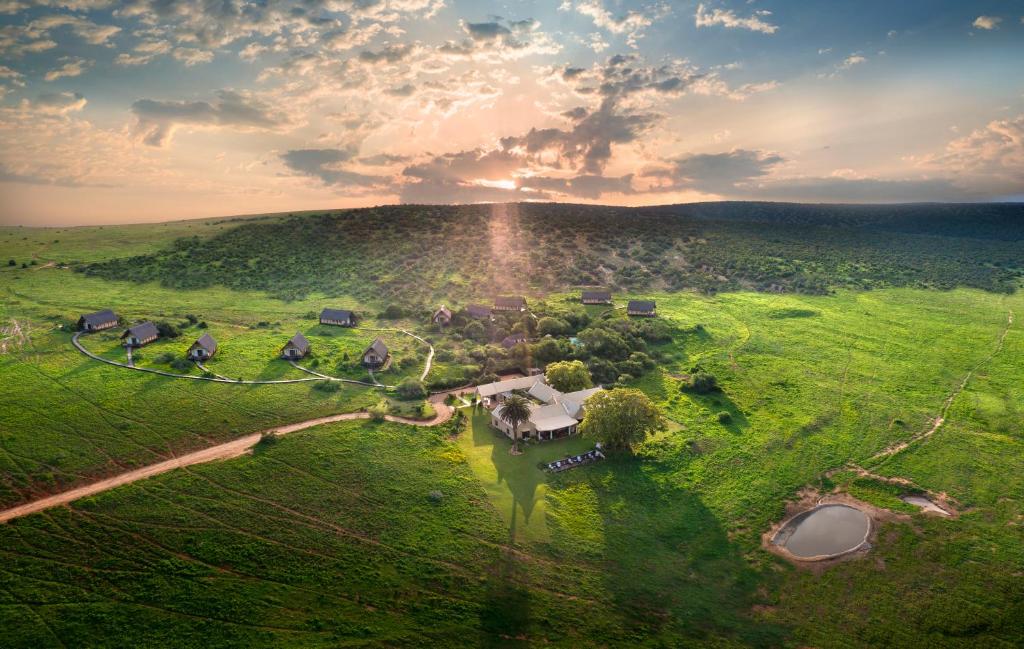
If you want to splurge and watch elephants at the waterhole without leaving your room, this is it. Around €1,650 a night for two, all meals included.
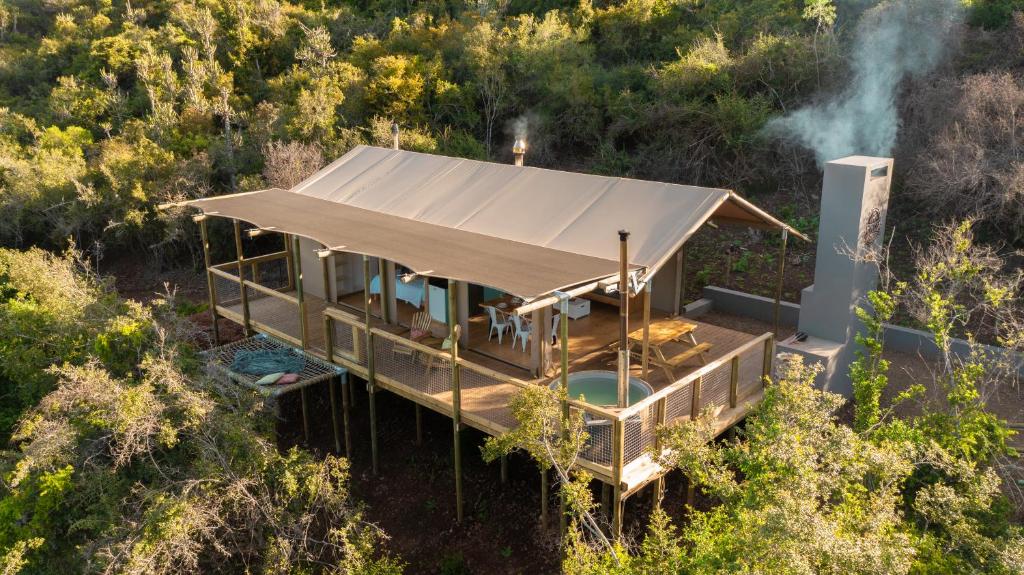
A tent with a hot tub, a braai, and some of the best views we had in South Africa. A beautiful place that makes your experience unique. Around €160 a night for two.

The budget-friendly pick near Addo town, with a garden and a pool to relax in after a full day of game driving. Around €100 a night, breakfast included.
1. The gate opens earlier than the reception where you buy your tickets. If you want to be in the park at opening time, buy your entry ticket the day before.
2. Driving in the park is easy. You get a detailed map when you buy your ticket, showing every road and which ones are paved versus gravel. Signage is clear throughout and you don’t need a 4×4.
3. We drove from 7:00 to 15:00 and that was plenty. Most animals disappear into the shade once it gets hot around midday, so there’s not much point staying much longer.
4. Watch out for the dung beetle. A protected species, and there are a lot of them on the roads. Drive carefully and never run one over.
5. There are two entry and exit gates. Buy your ticket at the main gate, but you can leave through the Matyholweni Gate if that’s closer to your next stop. Just remember it closes 30 minutes before the main gate.
6. Keep your distance from elephants and always leave them room to move. Never block the road. Self-driving among wild animals is a privilege, treat it that way.
7. Waterholes are your best bet for sightings. When it’s warm, elephants and other animals head there to drink and cool off. We saw dozens of elephants at Hapoor Dam alone.
8. Enter the park with a full tank. There’s a small gas station near the entry gate if you need it, but you’ll be doing a lot of driving inside the park, so don’t cut it close.
9. Follow the park rules: stay in the car except in designated viewing areas, keep to the 40 km/h speed limit, lock your doors, and never feed the animals.
10. Bring food and drinks. The only restaurant is near the main gate, and you don’t want to drive all the way back for lunch while you’re out exploring. Pack a real lunch and plenty of water, and eat at the gated Jack’s Picnic Site, which also has toilets.


Have your phone number, license plate, and passport number ready when you register at the gate office. It’s a short form to fill in before you pay the conservation fee, and having the details ready saves you a few minutes. Pack sunscreen, binoculars, a hat, and snacks, the essentials for a full day of slow driving in the sun.


The name gives it away: the elephant is the animal you’re guaranteed to see in Addo, especially at the waterholes. Beyond that, you’ll likely spot zebras, warthogs, kudu, eland, meerkat, ostrich, and buffalo.
Addo also has lions, along with the rest of the Big Five (rhino and, if you’re lucky, leopard). Lions are harder to spot than elephants. We heard it’s best to head further into the park to find them, but we didn’t see any ourselves. Patience helps and so does a good tip from the sightings board at the main camp.
If you count Addo’s marine section near Gqeberha (Port Elizabeth), which protects great white sharks and southern right whales, some people call Addo home to the “Big Seven” instead of the Big Five. That part of the park needs a separate boat tour, it’s not something you’ll see from the game-viewing roads.


Self-driving is the cheapest and most flexible way to see Addo, but a guide has an eye for wildlife that’s hard to replace on your own. If you want the best of both, here are a few options worth knowing about. If you feel more comfortable with a tour, that might also help you to spot the animals you are less likely to see, like lions.
A 9-hour all inclusive full-day safari from Addo or Port Elizabeth. It includes the transport, lunch AND the park fees.
€150, including park fees
Another full-day safari tour, that includes a traditional South African Braai. Includes pick-up from the Port Elizabeth area.
€160, including park fees
A 4-hour excursion from the main camp, with well-experienced guides for an informative experience. Including transport from Addo.
€70, excluding park fees


There’s one restaurant inside the main game-viewing area, at Addo Main Camp, plus a couple of options if you base yourself in Gqeberha or Addo town instead.
Main Camp restaurant: the only sit-down option inside the park itself. Convenient if you don’t want to pack a full lunch, though it can get busy around midday when everyone’s driving back from the morning game drive.
Jack’s Picnic Site: not a restaurant, but it belongs on this list anyway. It’s a gated picnic spot with tables and toilets, the best place to eat your own packed lunch without worrying about wildlife wandering up while you eat.
If you’re staying just outside the park, most guesthouses (Hopefield included) serve breakfast, and Addo town has a handful of casual places for dinner. We kept it simple and mostly ate what we packed, which worked fine for a one-day visit.
Good to know before you go
Yes. The self-drive is easy and make the experience even more special. you don’t need anything besides the rental car you already have. One day is enough, which is great. Maybe, next time we would get the ticket in advance, so we could enter even earlier. Also, start at one of the waterholes, which has the best chance to see the animals. Also, next time, we would also spend a night at a Garden Route Safari Lodge for a different experience.
Addo Elephant Park FAQ
Yes. It’s one of the easiest, most affordable ways to see hundreds of elephants up close in South Africa, without a guide, a 4×4, or a big tour budget.
No. The main tourist roads are a mix of paved and well-maintained gravel, and a regular rental car handles them fine. A 4×4 only matters if you’re heading into the more remote, off-road sections, which most day visitors never do.
Yes. SANParks runs several rest camps inside Addo, from Main Rest Camp to the more exclusive Nyathi Rest Camp, plus private options like Gorah Elephant Camp. Staying inside gets you into the park before day visitors and closer to the animals at dawn and dusk.
One full day is enough to explore the main game-viewing area and see elephants, zebras, warthogs, and more. Stay two days if you want to explore both the northern and southern sections at an easy pace, or you’re hoping for a lion sighting.
Yes, all five (elephant, buffalo, lion, rhino, leopard) live in the park, though leopards are extremely difficult to spot. Elephants and buffalo are close to guaranteed, lions and rhinos take some luck and patience, and most visitors never see a leopard at all.
Some people count Addo’s marine section near Gqeberha as part of a “Big Seven,” adding great white sharks and southern right whales to the usual Big Five. That part needs a separate boat tour, it’s not something you’ll see from the game-viewing roads.
Just some links to the websites I use to book my trips. I receive a small fee at no extra cost to you when booking through these links. Thanks for your support ♡
We use cookies to personalize content, provide social media features, and analyze our traffic. We also share information about your use of our site with our analytics partners. You can change your preferences at any time. Privacy Policy Cookie Policy


