

3.5 km, 1.5-2 hrs up
100k IDR weekdays
April to October
€30 per person for tourists
Mount Ijen is a stratovolcano in the far east of Java and very impressive place in Indonesia. At the top there is a turquoise lake with the acidity of battery acid. Below it, men carry sulfur out of the crater on their shoulders, for only a few euros a load. And in the dark, before the sun comes up, the burning gas turns blue, also referred to as the blue fire. Most people know the mountain by its Indonesian name, Kawah Ijen, which just means Ijen crater. It sits inside a much larger caldera near Banyuwangi, a couple of hours from the Bali ferry, and it has become one of the busiest hikes in East Java. That popularity comes with rules that did not exist a few years ago, including a health certificate you now have to show at the gate.
Here is what the climbing Mount Ijen is actually like, what it costs, when to go, and how to get there from Bali or from Surabaya. If you already know you want someone else to handle the logistics, you can compare Ijen tours here.
Mount Ijen is an active volcano of 2,386 meters, part of a volcanic complex that stretches across the eastern tip of Java. It’s not the fact that it is a volcano that makes it special. It is the sulfur crater inside.
The lake at the top is the largest highly acidic crater lake in the world. Its pH is roughly that of battery acid, and that is exactly why it has that milky turquoise color. You can walk along the rim and look straight down into it. You can’t touch it, and it’s also definitely not what you want.
Around the lake, volcanic activity pushe sulfuric gas out of the rock at premium high temperatures.premium high temperatures. When that gas hits the oxygen in the air it sparks, which is what creates a blue color in darkness and in complete darkness: the famous blue fire. It is a chemical reaction that happens all day and all night, but you can only see the color when it is fully dark outside.
The area became a UNESCO Global Geopark, which is part of why the rules around visiting have tightened. This means more rangers, more monitoring, and also more paperwork. This means more rangers, more monitoring, and also more paperwork. But I only believe that it’s a good thing.
The hike starts at Paltuding, the gate and parking area at the base. From there it is about 3.5 kilometers to the crater rim, with around 600 meters of elevation gain. Most people do it in 1.5 to 2 hours going up and coming back down takes about an hour. The path is wide and easy to follow for the first two thirds, and there is a small cafe with toilets around the 2 km mark. After that it gets steeper and the path becomes more gravel.
In general, I would describe the hike as moderate level. If you can walk uphill for two hours you can do this as there is no climbing or scrambling involved. However, make sure to bring shoes with grip.
On the way up, he will probably be passed by many sulfur miners they are walking down with full baskets of sulfur. Make sure to get a site for them because they are carrying 80-100 kg.
Once you reach the rim you have to make a choice, and the two options go in opposite directions. Left and down takes you into the crater, to the blue fire and the edge of the lake. Right and up along the rim takes you to the sunrise viewpoint.


To see the blue fire you need to be walking by 2:00 AM latest, preferably, you start around 1:30 a.m. Tours from Bali leave around 6:00 p.m while from Banyuwangi tours leave at 11:00 p.m.
The descent into the crater is the hardest part of the whole thing. It is steep, it is rocky, and you are doing it by headlamp with people coming the other way. This is also where you need a gas mask against sulfur dioxide. When the wind shifts and a cloud of gas comes over the path, it burns your eyes and your throat.
Good to know: the blue fire is not guaranteed. When it’s rainy, you might not see the blue fire, and it’s unsafe to get down into the crater.
I have not seen the blue fire myself. We climbed Ijen during the day, so everything in this section comes from research and from what other hikers told us.
Yes. And this is also what we’ve done. Who winds up during the day instead of the night. It meant limited crowds and being able to see the crater in full daylight. The views are stunning because of the blue color made by the acidity.
You also get to watch the whole mining operation, which you cannot do in the dark. During the day you see the whole chain: the pipes, the yellow blocks, the baskets, the weighing station. This was a very interesting thing to experience.
Of course, both things have their benefits. Going in later during the day makes you miss the blue flames and sunrise. If you only do this once, you travel all the way from, for example, Bali, the night hike is the better version, in my opinion.


Inside the crater, ceramic pipes channel volcanic gas so it condenses into liquid sulfur, which cools into bright yellow blocks. Men break those slabs apart by hand, load them into two woven baskets on a wooden pole, and carry them out. Most of them do that trip twice a day. Some do it three or four times. It is quite crazy, as one load is around 80 to 100kg. Every load gets recorded on a weighing station on the way. The price they get paid for this, is strikingly low. Most of the men work without a mask, or with a scrap of cloth around their face.
Ijen is a great experience, and it is also one of the only hikes I have done that leaves you speechless for something else than the landscape. These man and the sulfur business is impressive, but also leaves a weird taste.


You can descend to the crater floor when the rangers allow it, and it is a different experience from standing on the rim. You end up at the edge of the lake, next to the pipes, in among the miners at work.
But, it is risky. This is one of the most dangerous workplaces in the world. Only go in with a real gas mask. If you are going down with one of the miners rather than a guide, know that they do not always hand you a mask up front, though they are right next to you when the fumes get bad and they will pass one over.
My friend went down, however, I decided to stay on top. In the end, the views is what you come here for. The road down in the crater is also quite steep and rocky. This is more intense than the hike itself.


Entrance fee. Foreign visitors pay 100,000 IDR on weekdays and 150,000 IDR on weekends and national holidays, which is roughly €5.50 and €8. Indonesian citizens pay less. You pay in cash at the Paltuding gate, so bring rupiah.
Opening hours. The gate opens around 1:00 and closes at 12:00. Note the closing time: this is a mountain you visit in the early hours, whether it is in the night and for sunrise or in the early morning. Don’t visit in the afternoon.
Closed days. The park shuts completely on the first Friday of every month. Check the date before you book transport.
Health certificate. Since January 2024 you need an official health certificate to enter, and it gets checked at the gate. You can get one at a hospital, clinic or Puskesmas in Banyuwangi up to seven days before your hike, and there is now a medical post at the Paltuding entrance itself that does the check and issues the certificate on the spot. It costs somewhere between 25,000 and 100,000 IDR depending on where you go, so €1.50 to €5.50. If you book a tour, ask whether this is arranged for you, because a lot of operators handle it.
Gas masks. Rent one for 25,000 to 50,000 IDR at the gate, or at the top of the crater. Most tours include one. If you are going down to the blue fire you need it.


Go between April and October. That is the dry season, and it gives you the clearest views over the lake and a trail that is accessible. December to March is the wet season and the heavy rain makes the descent into the crater dangerously slippery. The trail might close because of floods, so you are not certain if your trip can happen.
Whatever month you pick, dress for cold. It sits between 0 and 10°C at the top before dawn and the wind up there is strong. This could be quite a change from the warmer temperatures. Make sure to bring layers.
Banyuwangi is the town you want. It is about 1 to 1.5 hours from Paltuding, and it has the ferry port, the train station and the airport. Generally, I recommend visiting Mount Ijen with a tour, because it will make your live easier. It is also possible to get a driver that will allow you to explore East Java on your own.
Cross to Java on the ferry from Gilimanuk in northwest Bali to Ketapang in Banyuwangi. The crossing takes about an hour. Getting to Gilimanuk from South Bali is the long part, roughly 4 hours by car from Canggu or Seminyak. From Ketapang it is a short taxi ride into Banyuwangi. However, the easiest thing to do is to go on a tour from Bali, as it includes all transport. Mount Ijen is located on the far east of Java. Bali is actually quite close by.
The train is the easy option. Several services run daily from Surabaya Gubeng to Ketapang station in Banyuwangi, taking between 5.5 and 7 hours depending on which one you take. Book ahead in high season.
You can also do Ijen as a very long day from Surabaya with a private driver, leaving in the middle of the night and driving back the same day. We did it that way because we were living in Surabaya at the time, so it made sense for us. I would not recommend it as your default. Stay in Banyuwangi if you have the choice. However, if you’re short on time, it might make sense to fly out to or from Surabaya.
Both work. It comes down to how much you want to organize at 11 PM. If you are already in Banyuwangi and comfortable walking in the dark, do it yourself and save the money. If you are coming from Bali, or you want the blue fire descent with someone who knows the crater, book the tour. Generally, I advise a tour as it will make your live a whole lot easier.
Pickup, entrance, mask, guide and often the health certificate handled in one price. A guide also has radio contact with the rangers, which matters on a night when the descent might get closed. If you are coming from Bali and want the whole thing solved in one booking, this is the best choice.
People show up underprepared for this one more than for any other hike in Java, so read this bit even if you normally skip the packing list.
Almost nobody books Ijen on its own. The standard way to do this corner of Java is as a Bromo and Ijen combination tour, and if you are traveling between Java and Bali anyway, that is the version I would pick too.
However, it can be quite a long trip. Mount Bromo sits about five hours west of Banyuwangi, so the two volcanoes line up between Surabaya and the Bali ferry. If you book them together, you sleep in the right place before each early start. Both of these hikes begin in the middle of the night.
The two-day version is the most common. You get picked up in the afternoon, drive to the Bromo area, sleep a few hours, do the Bromo sunrise at around 3 AM, then drive east to Banyuwangi during the day. Second night is short again, and you are on the Ijen trail by 2 AM. It it’s intense, but you see the highlights. This is a good 2-day, 1 night tour to book.
The three-day version adds a full night of sleep in between, and often a third stop. This is the option I recommend. The extra day costs you a bit more, but you have another night included and are also able to see one of the beautiful waterfalls. Check out this 3-day version from Banyuwangi or this 3-day tour from Bali.
Start and end points are flexible, which is the underrated part. Plenty of operators run Yogyakarta to Bali, Surabaya to Bali, Bali to Bali, or Banyuwangi to Banyuwangi. If you are already planning to cross between the two islands, pick the version that ends where you were going anyway and the tour effectively replaces a travel day rather than adding one.
The third stop is usually Tumpak Sewu, a wall of waterfalls near Lumajang and is one of the most impressive natural sight on Java. It sits between Bromo and Ijen, so you won’t add any driving time. Madakaripura waterfall is closer to Bromo and often bundled in as well, a short walk through a gorge. We chose this waterfall instead to escape the crowds. Sukamade beach shows up on four day and five day itineraries for the turtle nesting, though it is a long drive south on rough roads, so only add it if wildlife is the reason you came.
My honest take: do the three-day and two-night tour for the best experience that won’t burn you out.

From €15/night (Booking.com 9.5)
The best value for money on this list, and the closest of the four to the center of town. Simple rooms, good beds, and staff who will arrange your driver for the middle of the night without you having to ask twice. There is no restaurant, so eat in town before you sleep. A rare budget option that still looks nice!
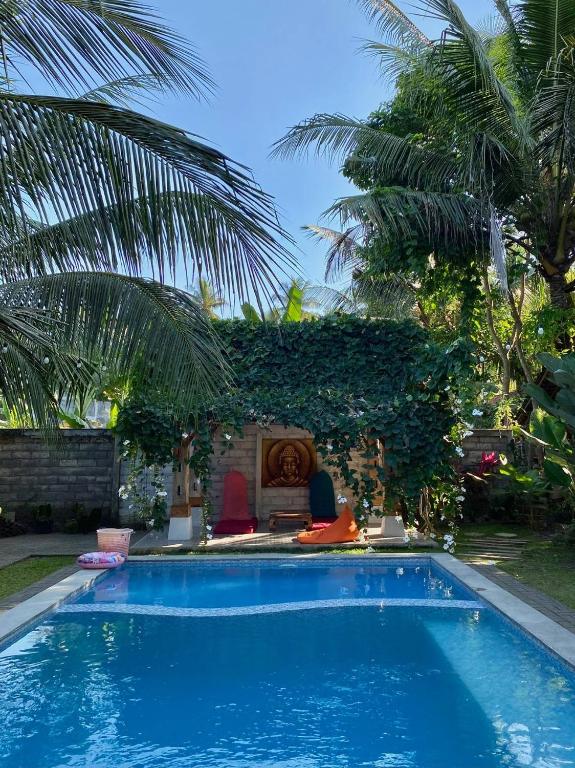
From €20/night (Booking.com 9.3)
A family-run homestay a little further out, and one of my key recommendations if you want somewhere personal instead of a hotel. Breakfast is included and they will pack it to go if you are leaving at midnight. You are 4 km from the center though, so you need transport for dinner. Great value for money.
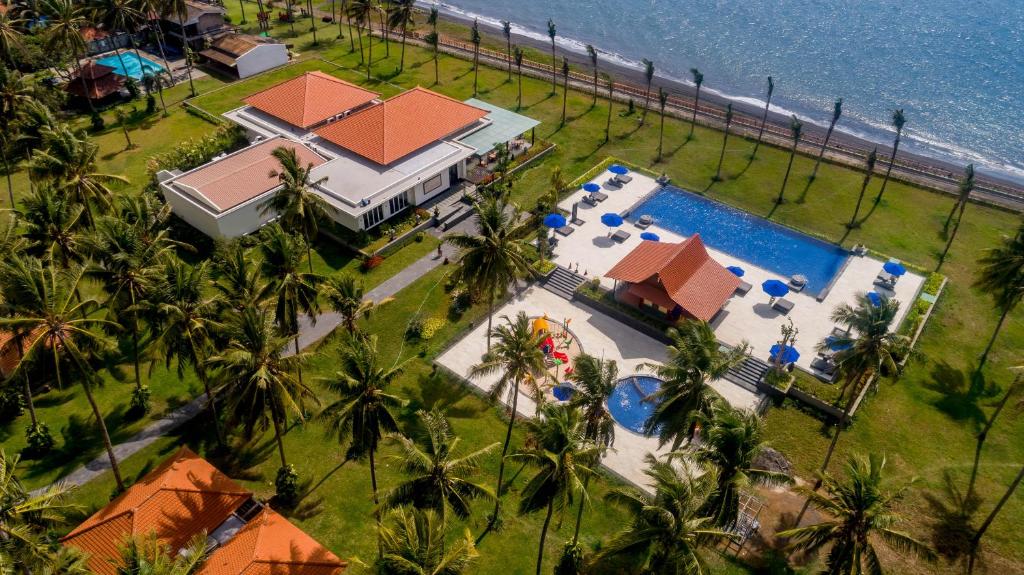
From €35/night (Booking.com 8.8)
A garden hotel right by the ferry port, with a pool that is exactly where you want to be after coming down off the mountain at 9 in the morning. Rooms are simple bungalows spread across the grounds rather than one block, which makes it feel calm. You are a bit for away from dinner though.

From €90/night (Booking.com 9.4)
Glamping tents on the road up to Ijen, so you cut a good chunk off that middle-of-the-night drive. The setting is the whole point here, with the mountains right in front of you. By far the priciest option and 20 km out of town, but if you want the volcano close and a beautiful place, this is amazing.
Before you go
First Friday closures
Bring cash
The blue fire is never guaranteed
The descent can be closed on the night itself for gas readings, and rain hides the flames. Set your expectations right.
The trolleys
Miners will push and pull you up the mountain in a cart for something in the region of 700,000 IDR. I don’t recommend doing this. They already take heavy loads, and it is better to hike yourself.
Do not touch the lake water
Connectivity and transport
Get a local eSIM before you land so you have data from the airport onward, which is useful here for tracking your driver in the dark. We use Simify and the code IBT15 gives you 15% off.
Questions
We use cookies to personalize content, provide social media features, and analyze our traffic. We also share information about your use of our site with our analytics partners. You can change your preferences at any time. Privacy Policy Cookie Policy


