

Santa Cruz or San Marcos
€20 to €215 per night
La Iguana Perdida, Santa Cruz
Stay in San Pedro or San Juan
Lake Atitlán is a lake in the Guatemalan highlands that should be part of your trip to Guatemala. Think shimmering water with volcanoes as a backdrop, and a ring of villages around it that each have their own vibe.
Before traveling there, I couldn’t figure out the main differences between the villages of Lake Atitlán, where to stay and how to plan our 3 days at Lake Atitlán. So this is the comparison I was looking for back then. It compares the villages where most travelers stay, tells you who each one suits, and lists the Lake Atitlán hotels I would book in each of them, from a €20 hostel bed to a hotel built on the cliffs.
Planning the rest of your trip? Check out my 2-week travel route through Guatemala.
In short
Jump to what you need
There are more than ten villages around the lake, but most travelers stay in one of these. This is a quick comparison that will help you choose the region and village that is best for you. The last column shows my favorite Lake Atitlán hotel in each village.
| Village | Best for | Evenings | Price level | My pick |
|---|---|---|---|---|
| Panajachel | First or last night, families, convenience | Busy town with plenty of restaurants | € to €€€ | Amaranto Hostel |
| Santa Cruz & Jaibalito | Quiet evenings, lake views, social hostels | Dinner at your hostel or hotel | € to €€€ | La Iguana Perdida (where we stayed) |
| San Marcos | Yoga, wellness, swimming | Calm and early | € to €€€ | Lush Atitlán |
| San Pedro | Nightlife, budget, Spanish school, Indian Nose sunrise | The liveliest on the lake | € to €€ | Mikaso Hotel |
| San Juan | Art, weaving, Indian Nose sunrise | Quiet, few bars | € to €€ | Eco Hotel Uxlabil |
If it is your first time and you have three nights, base yourself in Santa Cruz or San Marcos. Both are quiet, and you wake up with the volcanoes right in front of you. Then add one night in San Pedro or San Juan for the Indian Nose sunrise, because the tours leave from there at 4 am and there are no public boats that early. This is what we did. To be transparent, we actually paid double and kept our room in Santa Cruz so we could travel with only a day pack across the lake and didn’t have to pack all our bags.
Looking for a special night as a couple? Then go to Jaibalito, where La Casa del Mundo is built on the cliffs. San Pedro is the place for nightlife and the cheapest rooms, and San Juan is the one for art and textiles. Will you be arriving late with a shuttle? One night in Panajachel makes life a lot easier as the boats might not be running anymore. Once you have picked your village, definitely check my guide on the best things to do at Lake Atitlán to make the most of your time here.

As boats don’t run in the evening, it is important to keep in mind that you will be bound to the town of your accommodation for dinner and your evening program. Hence, many younger travelers settle down in San Pedro, the party village. However, in my opinion, there are way better and more beautiful places to stay.
The public boats (lanchas) leave when they are full and the last ones go around 5 to 6 pm. Santa Cruz is built up the hill from the dock, so a tuk-tuk with your luggage is no luxury. Bring cash too: Panajachel and San Pedro have ATMs, but the smaller villages have few or none. And book ahead for the dry season, from November to April, when the small hotels fill up first.
Most travelers arrive by shuttle from Antigua. The ride to Panajachel takes about three hours, and from the dock there you catch a boat to the other villages. Some shuttles continue to San Pedro, which saves you the boat with all your luggage. You can compare and book shuttles from Antigua on 12Go.
Panajachel, often referred to as “Pana,” is the main gateway to Lake Atitlán. It’s a hub filled with small market stands and a bunch of restaurants. Stroll down Calle Santander to shop for local handicrafts, enjoy the lively atmosphere and visit a restaurant. Generally, Panajachel is skipped (like we did) and mainly used as the point of entry.
In case you are planning to stay the night in Panajachel (which can be slightly cheaper in peak season than more popular villages), I would recommend Socialtel Atitlan (the former Selina, with a great pool) or Amaranto Hostel.
Good for: a first or last night, families, and anyone with an early shuttle. Also good if you want a pool, most places have one.
Skip it if: you want to wake up in a quiet village with a view. Pana is a real town, with traffic and noise.

From €60/night (8.4/10)
A hostel with private rooms, a garden and an outdoor pool in Panajachel. The rooms are simple, but you get a pool for this price. A good base for a late arrival or an early shuttle, as everything in Pana is close by.

From €80/night (8.6/10)
The former Selina, and still the social hub of Panajachel. There is an outdoor pool, a garden, a restaurant and a bar, with dorms next to the private rooms. Expect a younger crowd and some noise at night.

From ~€100/night (8.9/10)
The classic splurge in Panajachel. It sits right on the lake, with botanical gardens, a pool and a hot tub, and some rooms even have a fireplace. It is a bit outside the center, so you take a tuk-tuk into town.

From €215/night (8.4/10)
The big resort of Panajachel, right next to the lake, with an outdoor pool, a gym and two restaurants. Every room has a terrace towards the lake and the volcanoes. It feels more like a chain hotel than the rest of this list.
Santa Cruz is a smaller town. However, many travelers settle down here as it has two of the most popular accommodations on the lake for travelers: La Iguana Perdida and Free Cerveza. Santa Cruz also offers some of the best diving opportunities around the lake, and the trail to Jaibalito and San Marcos starts here. As the town is small (and uphill), it’s a quieter and more relaxed town, perfect for unwinding. A great place for lunch is Cafe Sabor Cruceño, serving great local dishes with amazing views. Definitely stay at La Iguana Perdida, known for its social community and location right on the lake. Free Cerveza, the other famous name in Santa Cruz, is a glamping-style hostel with a younger crowd.
Jaibalito is the tiny village next door, and there is no road to it. You arrive by boat or on foot. We walked there from Santa Cruz along the lake and stopped for coffee at El Indigo. Hotel La Casa del Mundo, built on the cliffs of Jaibalito, is one of the most beautiful accommodations around the lake.
My honest take
Santa Cruz is where I would stay again. It is quieter and prettier than San Pedro, and the shared dinner at La Iguana Perdida is a big part of why I recommend it. The hostel is right at the dock, so you don’t have to climb the hill with your bags.
Good for: couples and solo travelers who want quiet evenings, lake views and a social hostel.
Skip it if: you want restaurants and bars on your doorstep. In both villages you mostly eat where you sleep.

From €20/night (8.4/10)
Where we stayed. One of the most famous hostels around Lake Atitlán is La Iguana Perdida. The place offers a friendly atmosphere and views over the lake, including a lovely communal dinner that is served daily at shared tables. It’s a great base for exploring the area. The €20 is for a dorm bed, and the private rooms are basic.

From €25/night (8.8/10)
A small, privately run guesthouse in the village of Santa Cruz, and some rooms have a terrace or balcony. A cheap alternative if the hostels are full or you want more privacy. Keep in mind it is uphill from the dock, like most of Santa Cruz.
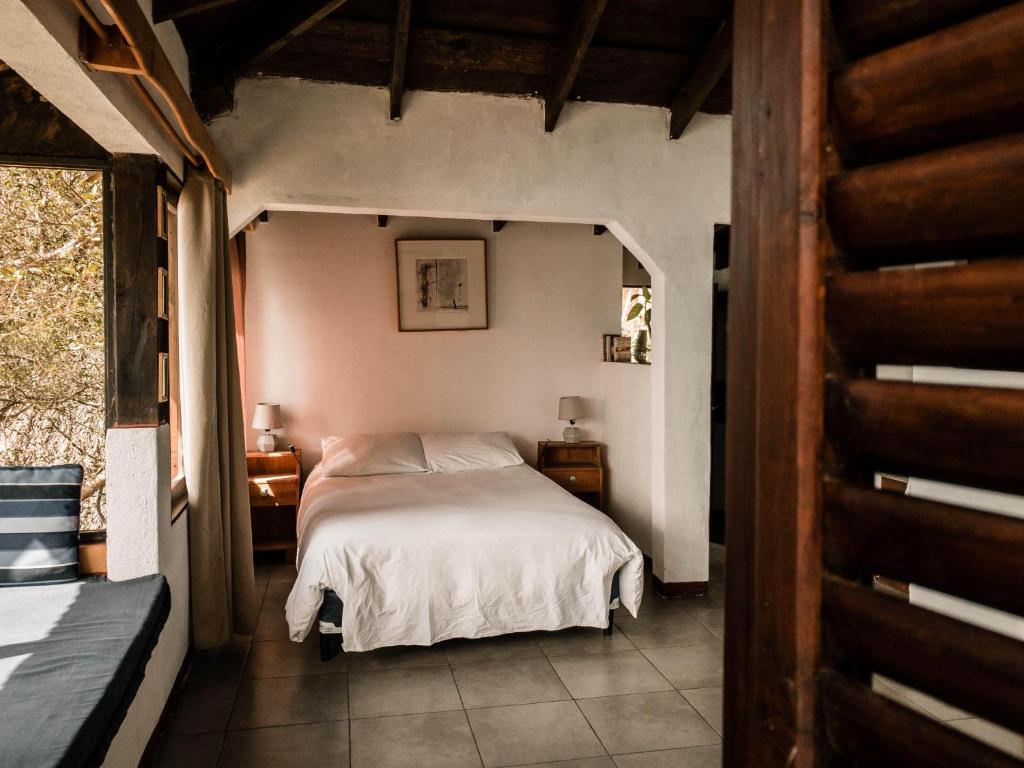
From €100/night (9.0/10)
Apartments on the shore of Santa Cruz, only reachable by boat, with a big living area and free kayaks. You look right at the volcanoes and, as the name says, the sunset. Great if you want the quiet of Santa Cruz without sleeping in a hostel.

From ~€135/night (8.8/10)
Built on the cliffs of Jaibalito, Hotel La Casa del Mundo is known for its amazing location and spectacular views. It is a popular wedding venue, and when we wanted to visit, it was closed for a private event. The rooms are beautifully decorated, and there are terraces, gardens, a swimming pool and several decks. If I return to Lake Atitlán, this is where I’ll treat myself.
San Marcos is the spiritual village of Lake Atitlán, mainly attracting travelers who seek experiences to relax, such as yoga and meditation. When in San Marcos, you should stroll through the main street with the little shops. However, my favorite thing to do in San Marcos was to visit Cerro Tzankujil Nature Reserve, ideal for a short hike but mainly for a swim in the lake and a relaxed afternoon. If you seek a place to eat, Konojel is an authentic eatery. If you want to treat yourself, Lush Atitlán is my pick.
Good for: yoga, retreats, swimming and a slow pace.
Skip it if: you don’t like the spiritual side. It is everywhere in San Marcos, from cacao ceremonies to sound healing.

From €20/night (8.6/10)
An adults-only guesthouse with a garden, a shared kitchen and a terrace, and every room has a balcony with garden views. The bathrooms are shared, which keeps the price this low. A rare budget option in San Marcos that still feels calm!

From €45/night (8.4/10)
A small hotel by the water, with a garden, a restaurant and a bar, and a vegetarian breakfast that fits San Marcos perfectly. Some rooms have a balcony. Good value for the location, but the rooms are simple.

From €110/night (9.0/10)
An eco-hotel where every room has a balcony with a view over the lake. Breakfast comes in an American, vegetarian or vegan version, which says a lot about San Marcos. Calm, green, and a little cheaper than Lush.

From €120/night (8.7/10)
Lush Atitlán in San Marcos is an eco-friendly accommodation with lake views. If you are seeking real luxury, a quiet setting and a retreat-like hotel, this is the place to be. Every room looks different, and it is a real boutique hotel.
If money really isn't a factor
Kula Maya Boutique Hotel & Spa is the most expensive stay around San Marcos, with its own spa right by the lake. Expect to pay from around €250 a night.
San Pedro is one of the largest towns around the lake and is known for its lively nightlife. That makes it a favorite among (younger) backpackers. Next to that, San Pedro is full of Spanish language schools. One of the main reasons to visit San Pedro is to hike up Indian Nose for the sunrise views, especially on a clear day. Because of our early trip to Indian Nose (starting at 4 am), we stayed one night in San Pedro. A must-try restaurant in San Pedro is Sababa Restaurant, where you can try their famous shakshuka (tasting even better after a hike), including great views over the lake. Alternatively, Pita Sabij offers delicious pitas.
We only brought our day packs and booked a simple room for that one night. It was nothing special, so I’m not listing it here. These are the places I would book now. My first pick is Mikaso Hotel, for its rooftop terrace over the lake.
Good for: nightlife, a tight budget, Spanish lessons and the Indian Nose sunrise.
Skip it if: you want quiet nights. The music in the bars by the water can go on late.

From €30/night (8.3/10)
A simple hotel right by the lake, with a terrace and a private bathroom in every room. Nothing fancy, but you are close to the docks and the bars without paying much for a private room.

From €40/night (8.7/10)
A small hotel with a garden and a shared kitchen, where every room has its own terrace and bathroom. Good value if you stay longer, for example for Spanish school. It is not on the water, so no lake view from your room.

From €55/night (8.6/10)
Located in San Pedro, Mikaso Hotel offers a mix of charm and comfort. The rooms are cozy and the rooftop terrace offers panoramic views of the lake and the volcanoes. A good choice if you want to relax and enjoy the view, while being close to the bubbly San Pedro.

From €100/night (8.7/10)
Private casitas with a full kitchen, a garden, a barbecue and a private beach, and a patio looking out over the lake. Great if you stay longer, or want the restaurants nearby without the noise at night. Pricey for San Pedro, but you get a whole little house.
San Juan La Laguna is the village of Lake Atitlán that is known for its art scene and dedication to maintaining the traditional Mayan culture. The village is home to a couple of famous art streets, such as Calle de los Sombreros and Calle de las Artes. Especially at the last one, you can find many art galleries where you can watch local artists at work. San Juan is the best place to visit local weaving cooperatives. For a local dinner, you can try Comedor Alma de Colores. Looking for some cheese and wine? Visit El Artesano Queso y Vino.
San Juan was my favorite village to visit, and it is a great base if you care more about culture than bars. It is a short tuk-tuk ride from San Pedro, so the restaurants there are never far away. The Indian Nose tours also pick you up here. My pick here is Eco Hotel Uxlabil Atitlán, which has its own jetty on the lake.
Good for: art, textiles, coffee, the Indian Nose sunrise and a calm, local village.
Skip it if: you want nightlife. San Juan goes to bed early.
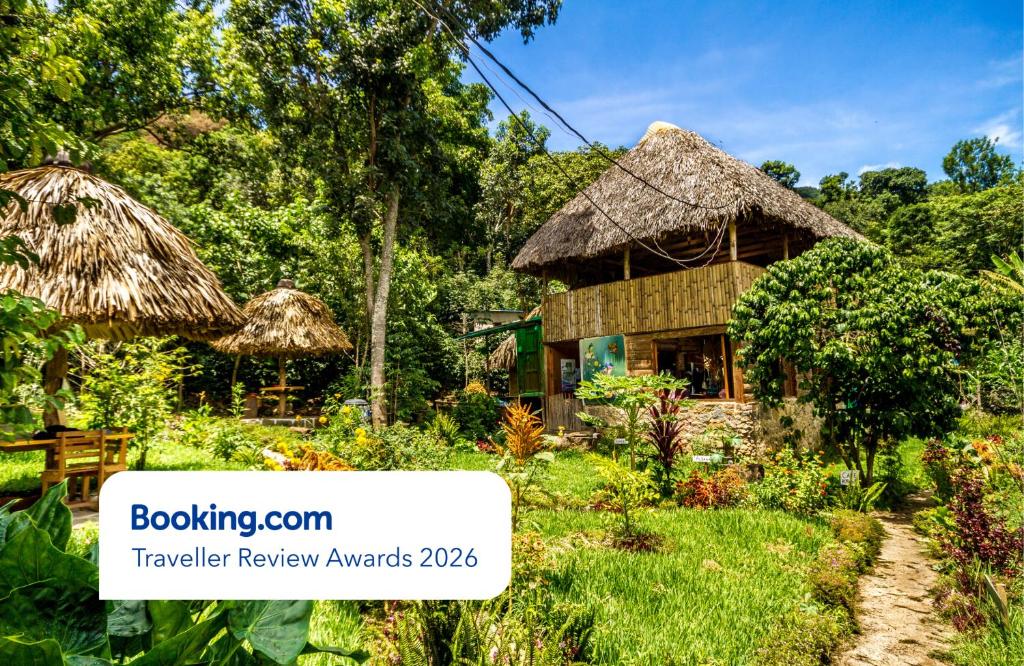
From €35/night (9.1/10)
A small eco-hotel with its own restaurant and a terrace, and some rooms with a private patio. For this price in San Juan, it is hard to beat. The rooms are basic, so you come for the setting.

From €35/night (9.4/10)
Apartments with a kitchen, a sitting area and a terrace with mountain views. Ideal if you want to cook yourself and stay a few nights in San Juan. More a private rental than a hotel, so don’t expect a reception desk.

From ~€65/night (8.4/10)
Located in the artsy village of San Juan, Eco Hotel Uxlabil Atitlán combines sustainability with comfort. You can enjoy eco-friendly amenities combined with great lake views, and you are close to the art galleries and markets. Free kayaks from their own jetty!

From €85/night (9.3/10)
The most comfortable stay in San Juan, with a terrace, room service and a 24-hour reception. It feels more like a classic hotel than an eco-lodge. If you want a comfortable room and a hot shower after a day of walking around, this is the one.
Stay connected at the lake
Hotel wifi around the lake is slow and drops out often, while boat captains, shuttle companies and small hotels all work through WhatsApp. An eSIM with local data keeps you reachable in every village. Install it before you fly and it works the moment you land. Use code IBT15 for 15% off through Simify.
Questions
It depends on what you want your evenings to look like, because the boats stop running after dark. Santa Cruz is best for quiet and lake views, San Pedro for nightlife and budget, San Marcos for yoga, San Juan for art and culture, and Panajachel for convenience. My own pick is Santa Cruz (we stayed at La Iguana Perdida), with one night in San Pedro for the Indian Nose hike.
For most travelers, San Pedro. It has the Indian Nose tours, the bars and the cheaper rooms, like Hotel Xetawaa’l or Mikaso Hotel, while Panajachel is mainly the arrival point. Pana makes sense for your first or last night, or when you travel with kids.
Do both. They are about three hours apart by shuttle and feel completely different. Antigua is the colonial city with cafés and volcano hikes, Lake Atitlán is where you slow down. Plan at least three nights at the lake.
It is tight. Getting there takes most of your first day, so two nights gives you one full day. Three nights lets you see a few villages and do the Indian Nose sunrise without rushing.
In San Pedro or San Juan. The Indian Nose sunrise tours pick you up there around 4 am, and there are no public boats that early. That is why we moved to San Pedro for one night with just our day packs.
La Casa del Mundo in Jaibalito for the cliffside setting, Lush Atitlán in San Marcos for a boutique stay, and Hotel Atitlán in Panajachel for gardens, a pool and space. For a real splurge, Kula Maya near San Marcos has its own spa.
San Pedro, with bars by the water and happy hours (we had drinks at Sublime). The music can go on late, so book a hotel a bit outside the center, like Refugio del Volcan Casitas, if you want to sleep.
Yes. Boats, tuk-tuks and many small hotels and restaurants only take quetzales. Panajachel and San Pedro have ATMs, but the smaller villages have few or none, so take enough cash before you leave Pana.
We use cookies to personalize content, provide social media features, and analyze our traffic. We also share information about your use of our site with our analytics partners. You can change your preferences at any time. Privacy Policy Cookie Policy


