March to May and October to November
Seville Airport (SVQ)
2 to 3 days
Córdoba, 45 minutes by train
Seville, the capital of Andalusia, is a city with a lot of different things to offer. Next to enjoying some amazing tapas, there are quite some sights to visit and more hidden neighborhoods to discover. This makes it a city worth a city trip on its own, however, for me, it was part of a 2-week Andalusia itinerary. I would go back once to spend a little more time in Seville and to be able to also discover all the hidden gems and discover more bars and restaurants.
Seville is also seen as the flamenco capital of Spain. Below are the 10 best things to do in Seville, from Plaza de España to tapas in the oldest bar in town, plus which tickets to book ahead, when to go and where to stay. Okay, time to start! You’ll read all about it in this guide.
Times tickets & sells out ahead
Two full days is enough to see Seville’s main sights, and three gives you room to slow down and add an evening in Triana. We visited as part of a 2-week Andalusia itinerary, so we only had a night and a day, and it left us wanting more. If Seville is a standalone city break, plan for at least 2 nights, ideally 3 if you also want to catch a flamenco show and spend an evening exploring Triana.
2 days in Seville: spend day one around the Cathedral, the Alcázar and Barrio Santa Cruz, and end with tapas in Alfalfa. On day two, go to Plaza de España in the morning, Metropol Parasol in the afternoon and walk along the river at sunset.
3 days in Seville: add Triana, the Hospital de los Venerables and a flamenco show. Or use the third day to get out of the city, with one of the day trips further down.
By plane: Seville has its own airport, Sevilla Airport (SVQ), with direct flights from major European cities.
By train: If you’re traveling from Madrid or Barcelona, the AVE high-speed train is the easiest option. Madrid to Seville takes around 2 hours and 40 minutes, with fares starting around €14 when booked in advance. Barcelona to Seville by train takes closer to 5 to 6 hours, so flying is often faster on that route.
Once you’re in Seville, you can walk to almost everything on this list. Coming from elsewhere in Andalusia? Our 2-week Andalusia itinerary shows how Seville fits into the rest of the route.
01
Plaza de España really impressed me! I knew it would be large from the several pictures I saw before, but it is crazy big (the diameter is 170 meters). Plaza de España is the most famous square of Seville and probably the most famous sight as well. Therefore, I would recommend visiting early in the morning or later in the afternoon to catch some beautiful light. It is also a great location to just relax and read a book and watch the world go by. Plaza de España is located in María Luisa Park and is free to visit.
The square sits on the edge of María Luisa Park, the biggest park in the center of Seville. We didn’t walk through the park ourselves, but it’s an easy add-on: shaded paths, fountains, tiled benches and, at the far end, Plaza de América with two museums. In summer, it’s one of the few places where you can walk in the shade.
Seville has several other plazas worth a slow walk. Plaza de Triana, right on the river in the Triana neighborhood, is a good spot to watch the sunset. Plaza del Salvador draws a lively evening crowd for tapas and drinks around its church steps. Plaza de la Encarnación, right underneath Metropol Parasol, is smaller but easy to combine with a visit to the Setas.
Plaza de España is worth building your day around. Go early morning or late afternoon for the light, not the middle of the day. The light will be harsh and it is busy.


02
Next on the list is Metropol Parasol, also called Las Setas. Metropol Parasol is a modern wooden construction with an amazing view over Seville from a height of 28.5 meters. The square where the construction is located is often home to events and on the ground floor, you’ll find several bars and restaurants. Entrance to the rooftop walkway starts at around €16, which includes a short film and, from April to October, the evening light show.
You can book the Setas de Sevilla experience here, which offers you an immersive experience at Metropol Parasol.


03
Barrio Santa Cruz is the old Jewish quarter between the Cathedral and the Alcázar, with narrow streets, orange trees and small squares.
Also in Seville, there is a lot to discover. However, just strolling around the little alleys and taking a turn left or right when you feel like it brings you to lovely places, little squares and more. Of course, this is also something we did and we stumbled upon some pretty spots.
Our hotel was in Alfalfa, just north of Santa Cruz, and that area is just as nice to wander around in the evening.


04
Another sight we visited was the Hospital de los Venerables. This is a sight that isn’t too popular and often not even mentioned in the top 10 sights of Seville. The place is a former hospice for priests. Especially the paintings in the church are really beautiful. The entry is €10. It’s in Santa Cruz, a few minutes from the Cathedral, so it fits easily into the same morning.
Hospital de los Venerables is more worth it than its reputation suggests. It’s rarely mentioned in top 10 lists, but the paintings inside make it worth the stop.


05
This guide should of course also address some other, more local, neighborhoods. One of the most popular neighborhoods of Seville is Triana, across the Guadalquivir river. Triana is also seen as the origin of flamenco. At Calle Betis, you’ll find several bars and restaurants and you can see this as the slightly off-the-beaten-track and more local area in Seville. Unfortunately, we only spent an afternoon here, but if I could go back I would also have some nice tapas in this area.
Right after the Isabel II bridge is the Mercado de Triana, a covered food market with tapas counters between the fish and vegetable stalls. We didn’t go in ourselves, but it’s an easy lunch stop. Underneath the market are the remains of the Castillo de San Jorge, the old castle of the Inquisition.
An afternoon in Triana isn’t enough. If I went back, I’d spend a full evening there for tapas instead of just passing through for a couple of drinks. Maybe, on a second visit, I would also base myself here for a more local vibe. Check out all areas and hotels in my separate where to stay in Seville guide.

06
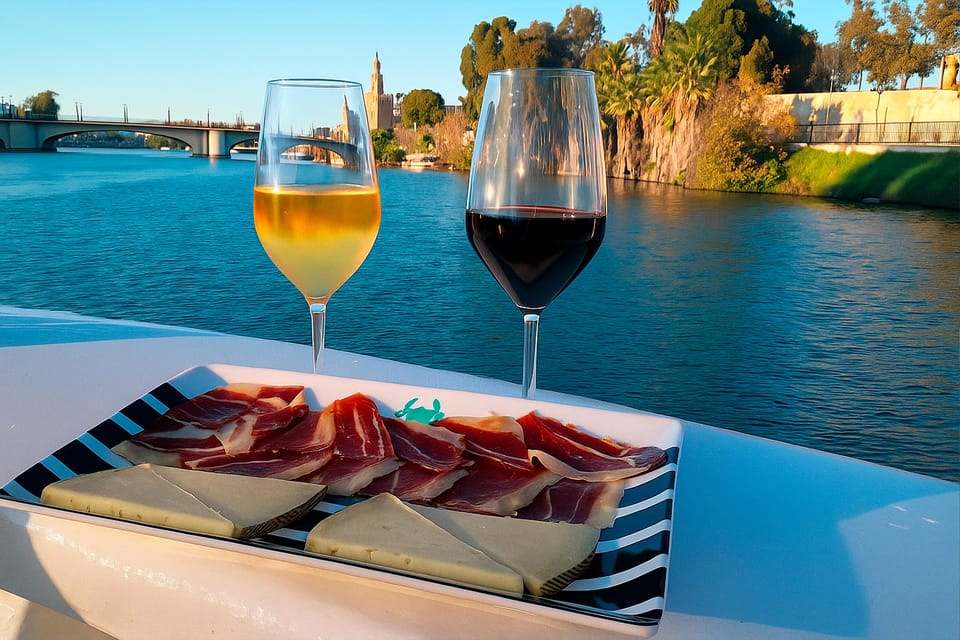
If you do one tapas stop in Seville, make it this one. El Rinconcillo is a must-visit Seville restaurant and is my top restaurant recommendation in this guide. This is the oldest bar in town (1670!) and it is already worth a visit for both interior and exterior. What I loved about this place, is that it is famous among tourists but locals tend to come here a lot too! We went here around lunchtime for some tapas and a glass of wine.

07
The Real Alcázar is a popular sight I didn’t visit myself. The reason for this was the long waiting lines and after having visited the Alhambra in Granada and several sights in Seville already, we didn’t want to spend too much time waiting. However, in a complete list of things to do in Seville, the Alcázar should be on the list.
It’s a royal palace with Moorish courtyards, tiled rooms and big gardens, and you might recognize parts of it from Game of Thrones. A general ticket costs €15.50, and the Royal Quarters upstairs are €5.50 extra. Tickets come with a time slot and are personal, so bring your passport or ID. In spring and fall, the slots for the next few days are often gone.
If you do want to visit and would rather skip the wait, you can book a skip-the-line ticket in advance.
We skipped the Royal Alcázar because of the long lines, and looking back, we don’t regret it. Seville has plenty else to fill your time and especially if you also visit Granada and the Alhambra, you’ve had your fair share. If I went back, I’d book a timed ticket so we wouldn’t have to make that choice.
08
The Seville Cathedral is the largest Gothic cathedral in the world, and the tomb of Christopher Columbus is inside. Climb La Giralda, the cathedral’s bell tower, for one of the best views over the city. You go up by ramps instead of stairs, so it’s easier than it looks. General admission typically costs around €14 (or €13 when booked online), which includes the cathedral, the Giralda, and the Church of El Salvador, a ten-minute walk away.
We didn’t go inside ourselves. If you do want to visit, make sure to book your tickets in advance.
09
Seville isn’t just associated with flamenco, it’s considered the art form’s birthplace. In 2010, UNESCO recognized flamenco as an Intangible Cultural Heritage of Humanity, and the Triana neighborhood is where much of that history began.
If you want to see it live, book a tablao rather than a generic dinner show. The Puro Flamenco Show at Museo del Baile Flamenco runs several times a night in an 18th-century courtyard in Santa Cruz, and tickets typically start around €26 to €29. We didn’t see a show in Seville ourselves. You can book your tickets in advance here.
10
Torre del Oro is the 13th-century watchtower on the bank of the Guadalquivir, from the time Seville was still under Moorish rule. Inside is a small naval museum, and from the top you look out over the river and Triana. Entry is around €3. We didn’t go up ourselves. The nicest way to get there is on foot: walk from the Cathedral to the river, follow the path along the water to the Isabel II bridge and cross over to Triana. It’s also where most of the river cruises leave from.
More time in Seville? Casa de Pilatos and Palacio de las Dueñas are two smaller palaces with tiled patios, both a lot quieter than the Alcázar. The Archivo de Indias next to the Cathedral, the Museo de Bellas Artes and the bullring are other good options. Or use the extra day to leave the city, with one of the day trips from Seville, that I mention in a separate guide.
Book a tour
There are plenty of tours in Seville, that all offer something different. A foodie experience, a local take on the city o
Get an eSIM for Europe before you land
Set up in five minutes at the airport gate. Code IBT15 for 15% off through Simify.
Seville is a good base for the rest of Andalusia. We visited all four of these places, but as stops on our road trip, not as day trips from Seville. If you only have one extra day, go to Córdoba. For more options, like Ronda, the white villages, Italica and Gibraltar, see our full guide to the best day trips from Seville.

The Mezquita alone makes Córdoba the best day trip from Seville, and the high-speed train takes about 45 minutes. Everything else is in our Córdoba city guide.

Possible with a tour that includes the Alhambra, but it’s a long day (about 2 hours 40 minutes each way). I’d stay a night instead. See our Granada guide and our Alhambra guide.

Sherry bodegas in Jerez, then the old town and the sea in Cádiz. Jerez is about an hour by train. Our Jerez guide has the bodegas we liked best.

One of the prettiest white villages, close to the beaches of the Costa de la Luz, about 1 hour 45 minutes by car. See our Vejer guide for where to eat and stay.
El Rinconcillo: the oldest bar in town and still my top tip. You can read why at number 6 above.
Bodeguita La Parihuela: We ended up twice in the same street for dinner, which was around Bodeguita La Parihuela located in Alfalfa. We had good tapas here, so in case you have no idea where to go for food, this is a recommendation.
El Tenderete: Close to our hotel (Patio de las Cruces, definitely a good price/quality ratio) we found the bar El Tenderete. It was completely packed every night and people were drinking beers on the street in front of the bar. Therefore, I would recommend paying the place a visit when you are close. The bar and hotel are both located in Alfalfa.
Ovejas Negras Tapas: Ovejas Negras Tapas opened after our visit and has since become one of Seville’s most talked-about tapas spots, earning a place in the MICHELIN Guide España. The menu mixes Andalusian tapas with Asian influences, close to the Cathedral and the Alcázar. Expect a wait if you show up without a reservation.
Bar Condendê: Bar Condendê, inside Mercado de Feria, is one of the least touristy tapas spots in the city, serving small plates with a South American twist. Most visitors never find it, which is exactly why it is worth a visit.
Balbuena y Huertas: we haven’t eaten here ourselves, but it’s the one I’d book for a dinner in Triana next time. It got a Bib Gourmand in the 2026 MICHELIN Guide, which means good food for a fair price. The kitchen does modern versions of Andalusian dishes, and there’s a tasting menu if you want to try a bit of everything.
La Cacharreria de Sevilla: We didn’t have an extensive breakfast every day, but one of the days we enjoyed a full brunch at La Cacharreria de Sevilla. A small place with nice breakfast bowls and sandwiches. You can sit inside, however, we were lucky to catch a place outside in the morning sun.
There are many fun rooftop bars in Seville. Unfortunately, we didn’t realize that when we were there. Two that come up on almost every list are La Terraza de EME, right across from the Giralda, and Terraza Doña María, with a view of the Cathedral. Cocktails cost around €12 to €16. For more options, check out this overview of rooftop bars in Seville.


Stay in Santa Cruz, Alfalfa or El Arenal and you can walk to almost everything on this list. Triana is a good pick if you want to be where the locals eat. These are four hotels at different budgets, and our guide to where to stay in Seville compares every neighborhood.
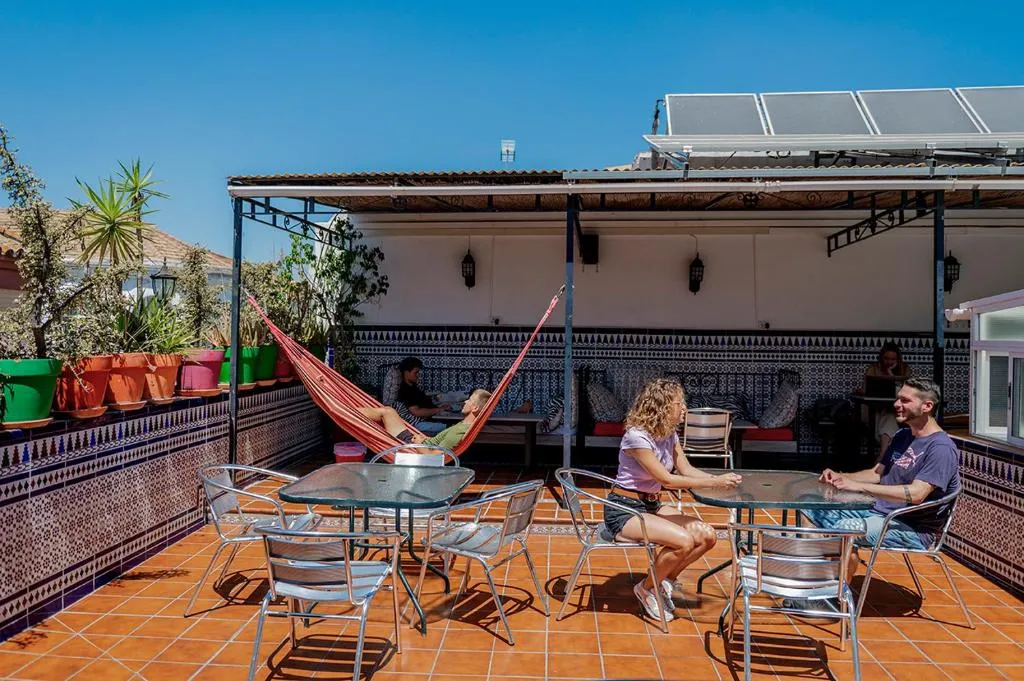
From €50/night (8.4/10)
Hostel Triana Backpackers is located in Triana, where you will have a fun night out. The two-person rooms have a shared bathroom, and there’s a rooftop terrace to hang out in the evening.

From €75/night (8.2/10)
Nüa Cicerone in the old center is a great budget option. Modern room and a communal terrace. Unfortunately, it is a bit noisy and the wifi isn’t too stable, but this still might be our favorite from the list.
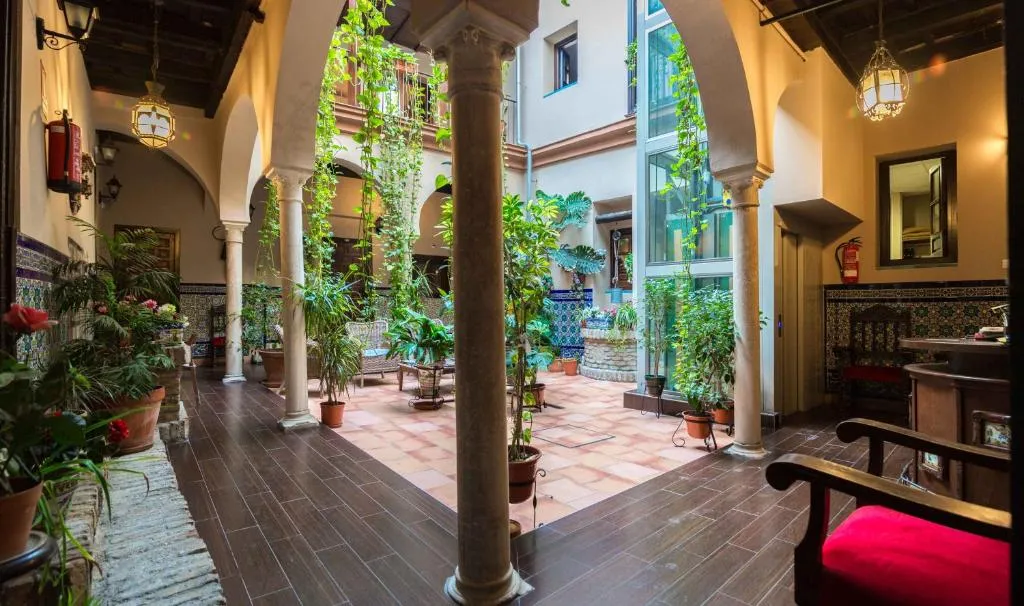
From €80/night (8.3/10)
During our stay, over New Year’s Eve, we stayed in Hotel Patio de las Cruces. A decent hotel at a central location, in Alfalfa. Don’t expect the world, but it is good value for money.
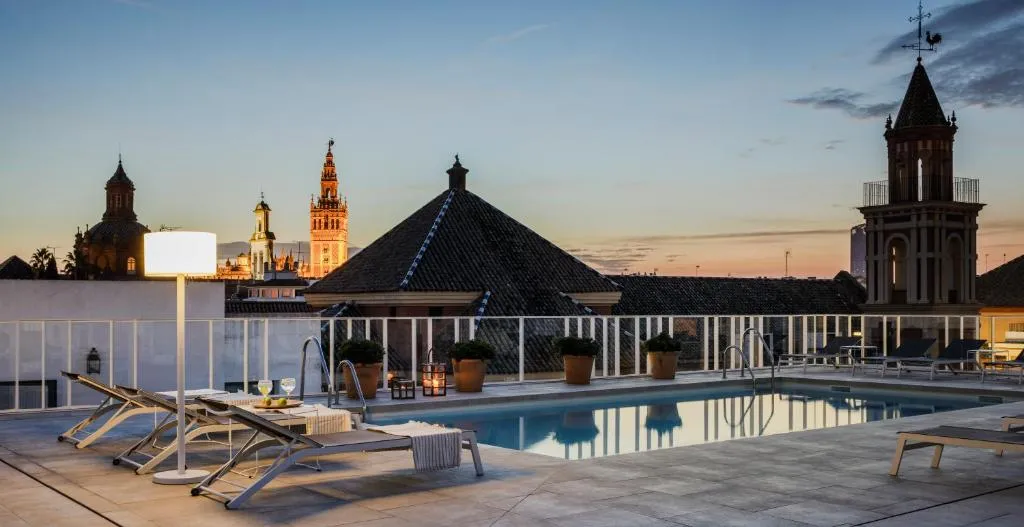
From €180/night (9.3/10)
Hotel Fernando III is your place to go if you want a pool and rooms that include balconies overlooking the city. It’s in Santa Cruz, so the Alcázar is around the corner.
Best time to visit
The best time to visit Seville is spring (March to May) and fall (October and November). Summer is very hot, and winter is mild and quiet.
Spring (March to May)
The best time to visit, with days of 22 to 27°C and orange blossom in the streets. Semana Santa (21–28 March 2027) and the Feria de Abril (13–18 April 2027) fall in this season. It’s also the busiest and most expensive time, so book your hotel early.
Summer (June to August)
Hot. The average high in July and August is 36°C, and it often goes over 40°C. Plan your sightseeing for the morning and the evening, or spend these weeks in Granada or on the coast.
Fall (September to November)
From mid-September the worst heat is over, and October is one of the best months at around 26°C. November is quieter and cheaper, but it’s also when the rainy season starts.
Winter (December to February)
Mild days of 16 to 18°C, cold nights and few visitors, so Alcázar tickets are easier to get. We were in Seville over New Year’s Eve ourselves.
Before you go
Book your tickets
The Alcázar and the Cathedral use timed tickets. Book online a few days ahead in spring and fall, and bring your ID for the Alcázar.
Siesta hours
Many small shops and family-run restaurants close for a few hours in the early afternoon, especially outside the main tourist streets. Plan your errands around this.
Connectivity
Stay connected without hunting for wifi by getting a local eSIM before you land. Use code IBT15 for a discount on Simify if you are not from the EU and need a SIM card to explore Europe.
Book your flamenco show ahead
The best tablaos sell out several days in advance in spring and fall, so book before you arrive rather than on the day.
Questions
Start with Plaza de España, Barrio Santa Cruz and tapas at El Rinconcillo. Then book a time slot for the Real Alcázar and the Cathedral, spend an evening in Triana and see a flamenco show. Metropol Parasol has the best view over the old town.
Two full days is enough for the main sights. Three days gives you time for Triana, a flamenco show or a day trip to Córdoba.
April and October. Both are warm without the summer heat. April also has the Feria, but it’s the busiest and most expensive month. Avoid July and August if you can, when it’s around 36°C on average.
Yes, often in spring and fall. Tickets have a time slot, and the popular slots can be gone days ahead. Book online before you travel, or take a guided tour with tickets included if your date is sold out.
Yes. Seville combines a walkable historic center, some of Spain’s most striking architecture, and a food and flamenco scene that holds up against any other Spanish city.
No, Madrid is the capital of Spain. Seville is the capital of Andalusia, the region in the south of the country, and the fourth-largest city in Spain.
Seville is known as the home of flamenco, and for the Real Alcázar, the cathedral with the Giralda tower, and Plaza de España. It is also known for its tapas bars, orange trees, and two big spring festivals: Semana Santa and the Feria de Abril.


Save this guide for later
Pin it now, come back when you’re actually planning the trip.
We use cookies to personalize content, provide social media features, and analyze our traffic. We also share information about your use of our site with our analytics partners. You can change your preferences at any time. Privacy Policy Cookie Policy